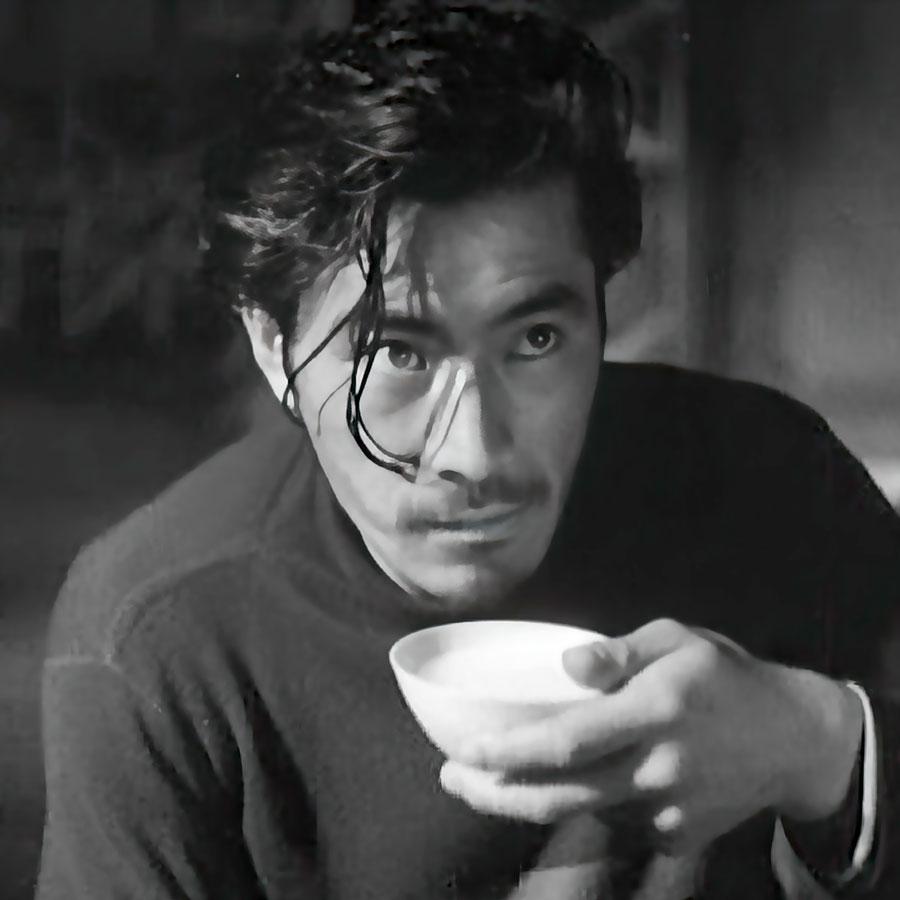
Eijima (Toshiro Mifune) waits for the weather to cooperate so they can escape over the mountain.
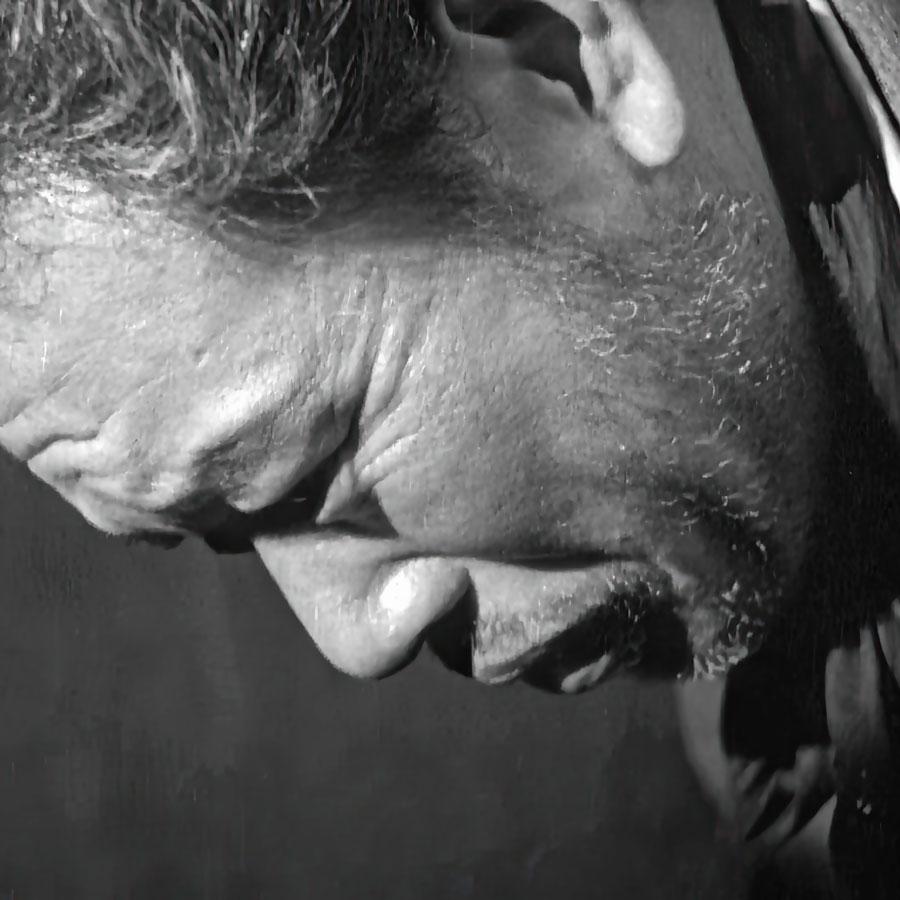
Nojiro (Takashi Shimura) loses himself in memories of his daughter.
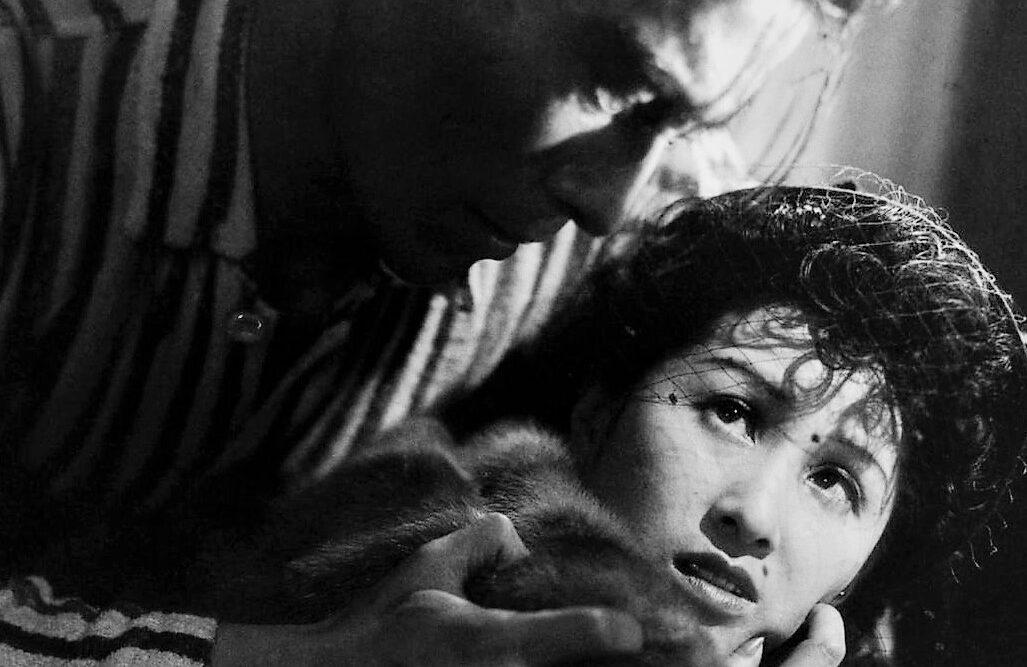
“The mountain would never let bad men return.” In his feature film debut, Toshiro Mifune’s forthcoming superstardom is easily glimpsed in his scene-stealing presence, his steely charm, his cool beauty, and his emotional volatility as young, impatient bank robber Eijima in Senkichi Taniguchi’s Ginrei no hate (US: Snow Trail). Teamed up with the most emotionally expressive face in Japanese cinema, Takashi Shimura (both actors would become longtime collaborators with master director Akira Kurosawa, who wrote the script for this film), the fugitive robbers are trapped by the police at the base of a snow-blanketed mountain in the Japanese Alps (the film was actually shot on the northern island of Hokkaido), their lives temporarily spared by triggering an avalanche with a gunshot. Fleeing into a blizzard, the robbers take shelter in a tiny mountainside inn maintained by an old man (Kokuten Kôdô) and his granddaughter Haruko (Setsuko Wakayama), the only other guest, professional mountaineer Honda (Akitake Kôno), eyed by the fugitives as their only hope of getting over the mountain, even if it requires deadly force. Part drama, part adventure, the film’s harsh noir sensibility comes first and foremost from Mifune’s presence, that alone infusing the film with dread and deception. Another highlight is Akira Ifukube’s score, which combines sweeping orchestral accompaniment with scenes of isolated trumpet or French horn or violin for dramatic effect. The dominant force, however, almost a character in itself, is the blizzard-like bleakness, stifling snow and whipping wind outside battling with the firelit warmth of the inn. By the end, violent confrontations and survival instincts materialize on the mountain (often shot diagonally to look steeper), the film’s denouement a moving tribute to nature’s power.
Rate+Review Snow Trail
You must be logged in to submit a review. You may also register for an account.