Bette Davis, Joseph Cotten, David Brian, Ruth Roman, Dona Drake, Regis Toomey, Minor Watson, Ann Doran
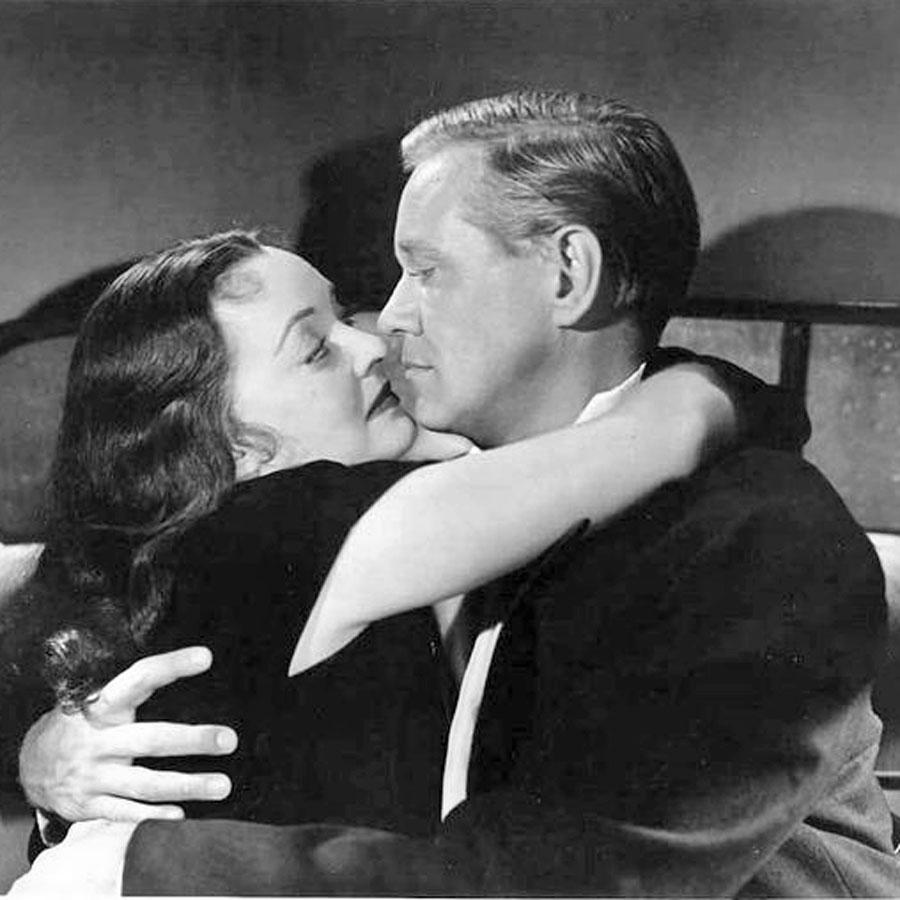
Rosa Moline (Bette Davis) and Neil Latimer (David Brian) have been hiding their affair for more than a year.
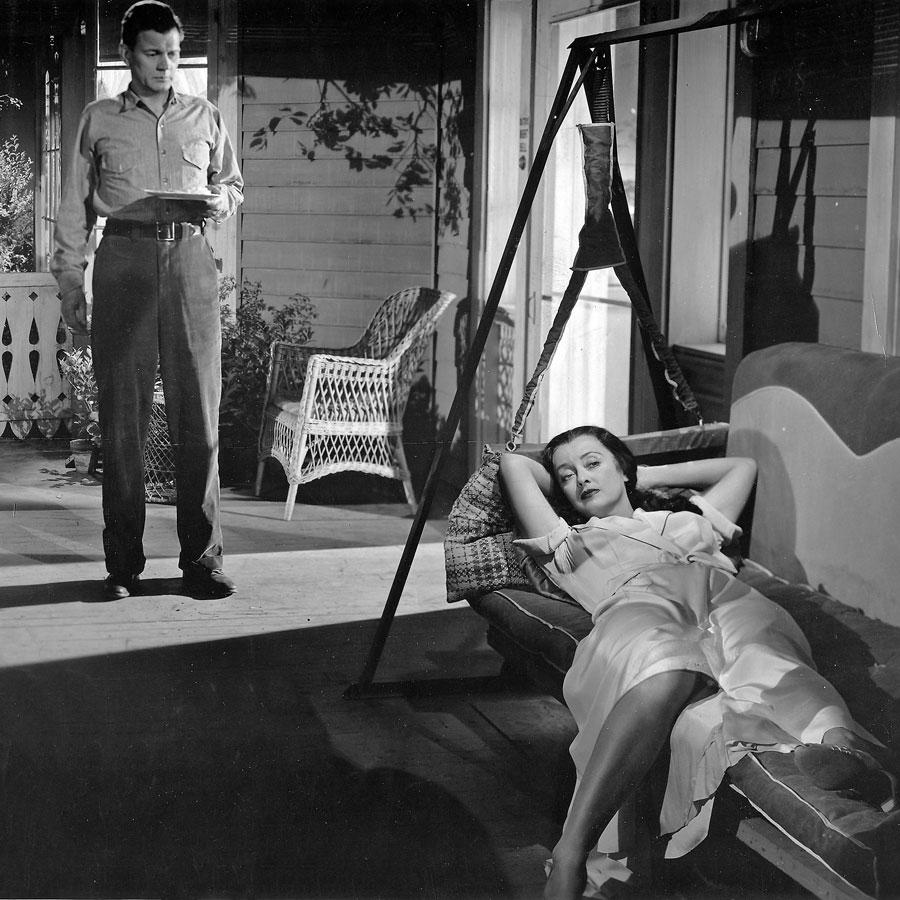
Dr. Lewis Moline (Joseph Cotten) comes home to find Rosa plotting her escape to Chicago.
“This is the story of evil,” says the opening narrator. Just like William Wyler’s The Letter (1940), King Vidor’s Beyond the Forest begins with an adulteress played by Bette Davis having murdered a man, both films proceeding through flashback to explain what led up to the crime of passion. In this case, the killer Rosa Moline (Davis) is claiming self-defense, but the victim’s identity will remain a mystery until the film’s final act. Set in a small Wisconsin town ironically named Loyalton, where the screeching inferno of the local saw mill dominates the town like a volcano (“that mill sucks all the juice out of this town”), the film has a brief interlude in a creepy, gritty corner of Chicago where Rosa flees to be with her lover Neil Latimer (David Brian) but is suddenly surrounded by menacing faces on the street. Joseph Cotten plays the cuckolded town doctor, Lewis Moline, whose patience with his wife’s dalliances is stretched to the limit as her marital dissatisfaction and selfishness worsen every day (“What a dump!” she complains, a line that would later be made famous in Who’s Afraid of Virginia Woolf?). In the hands of director Vidor, the king of melodrama, the film is an over-the-top variation on Madame Bovary, especially when the miscast Davis overacts (the film was her last under her Warner Brothers contract and reputedly assigned to her as a form of punishment). Robert Burks, Hitchcock’s loyal cinematographer, here uses noir lighting sparingly but effectively, for example when Rosa enters a Chicago bar alone or when she’s recumbent on the front porch at night; funnily enough, in a nod to what would become a noir aesthetic trope, at one point Rosa exclaims, “All the houses in magazines have Venetian blinds!”
Rate+Review Beyond the Forest
You must be logged in to submit a review. You may also register for an account.