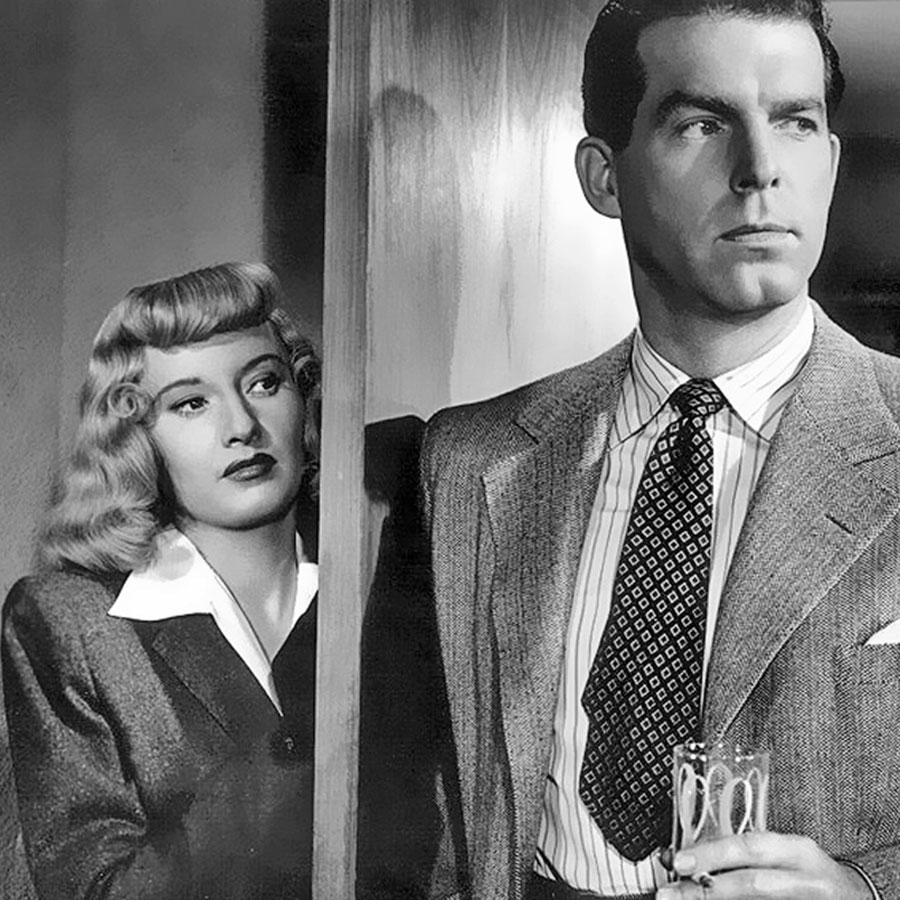
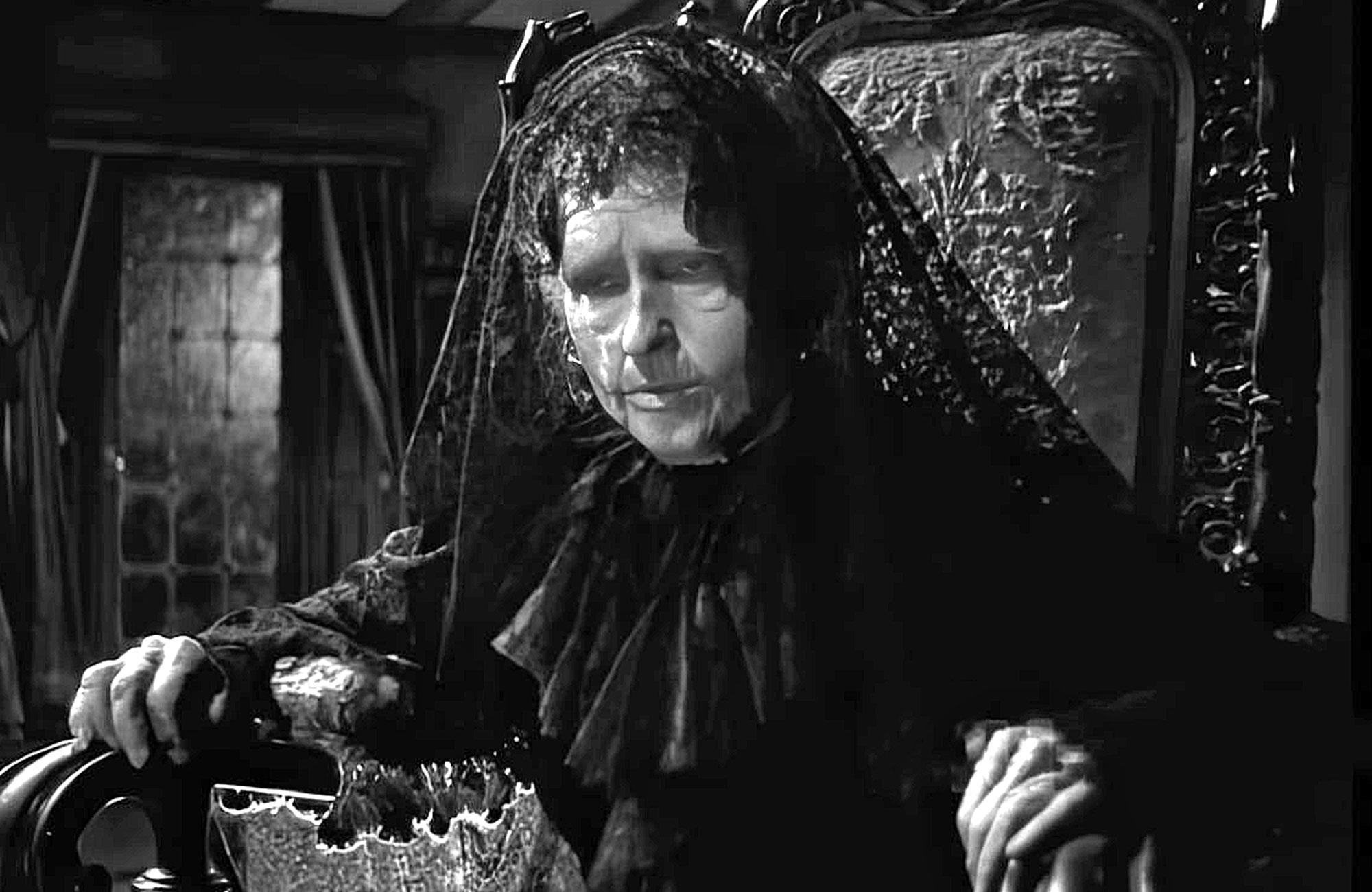
John Carradine, Jean Parker, Nils Asther, Ludwig Stössel, George Pembroke, Teala Loring, Sonia Sorel, Henry Kolker
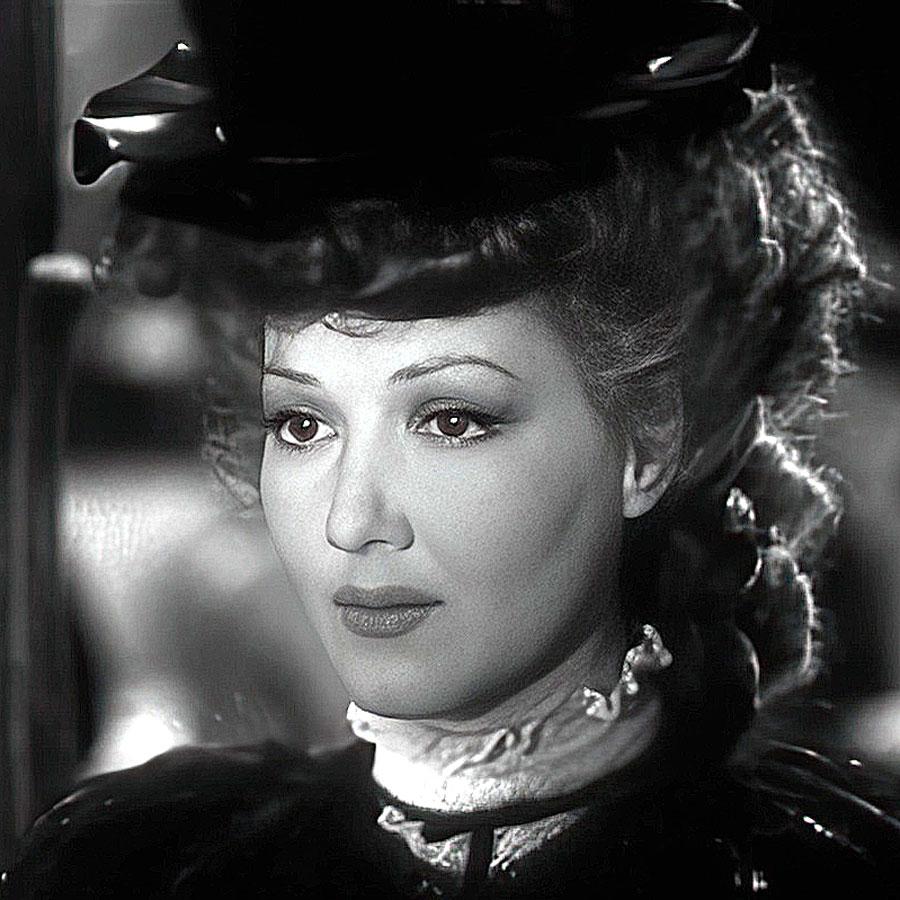
Lucille (Jean Parker) accepts a commission to design costumes for the puppeteer.
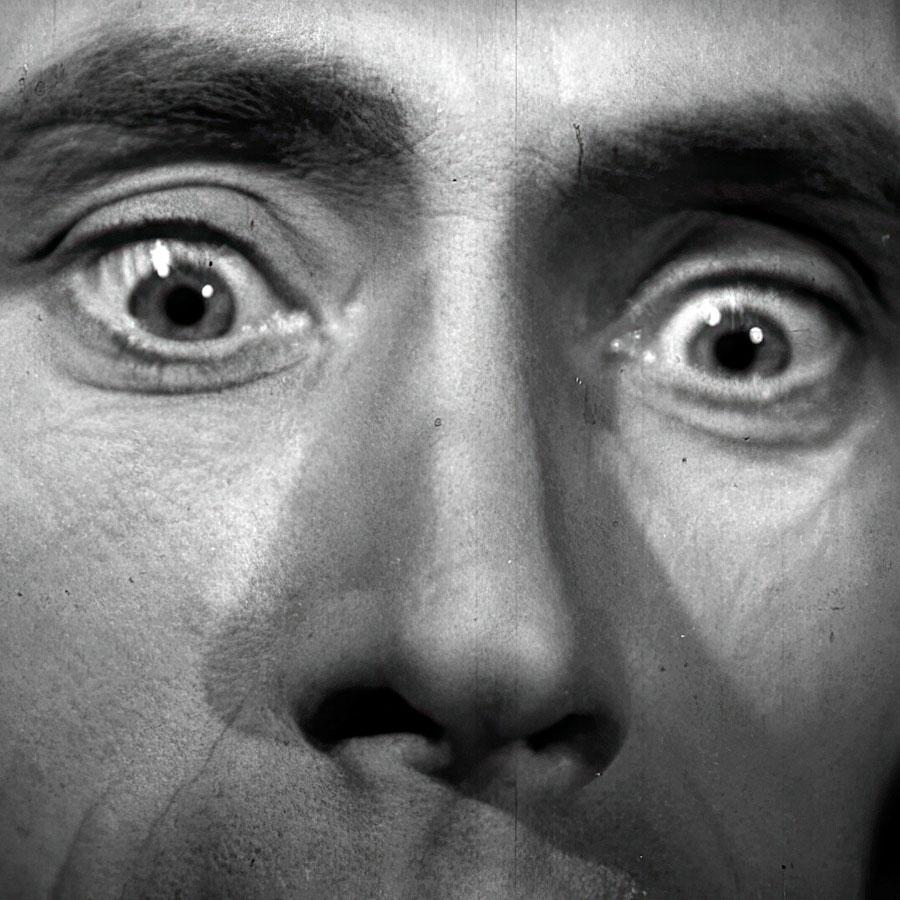
The wide eyes of Gaston Morrell (John Carradine) precede each grisly murder.
Long before Jack the Ripper was murdering unknown women on the streets of London, the French “Bluebeard” legend was warning Parisian women that the men they trusted the most, and even married, were just as likely to harbor a killer instinct. While both legends have inspired many Gothic noirs, especially during the mid-1940’s (1944’s The Lodger, 1945’s Hangover Square, 1946’s The Spiral Staircase), only the b-movie magician Edgar Ulmer, influenced deeply by his German expressionist heritage, could create such a strange horror art noir as 1944’s Bluebeard with a practically nonexistent budget in a matter of days. Cleverly collaborating with cinematographer Eugen Schufftan and art director Paul Palmentola, Ulmer paints poverty row sets with rugged poetry, using shadows and mattes to create a period Paris that’s both epic and claustrophobic. In what many consider his finest performance, John Carradine takes the title role, a puppeteer and painter who can’t fight the urge to strangle his models, including the lovely Lucille (Jean Parker) whose genuine affections make Bluebeard consider giving up painting for good. The solid performances of all the key players and use of creative cinematic techniques like Dutch angles (especially during flashbacks) and extreme close-ups (especially capturing Carradine’s wild, psychotic eyes) help the film punch above its weight. Erdody’s orchestral score is too constant and florid, which weakens the tension in places, but for a micro-budget poverty production, the film takes itself quite seriously, and it pays off.
Rate+Review Bluebeard
You must be logged in to submit a review. You may also register for an account.