Claude Chabrol, François Truffaut (original story)
Raoul Coutard
Martial Solal
N/A
Cécile Decugis
Jean-Paul Belmondo, Jean Seburg, Daniel Boulanger, Henri-Jacques Huet, Roger Hanin, Van Doude, Jean-Pierre Melville
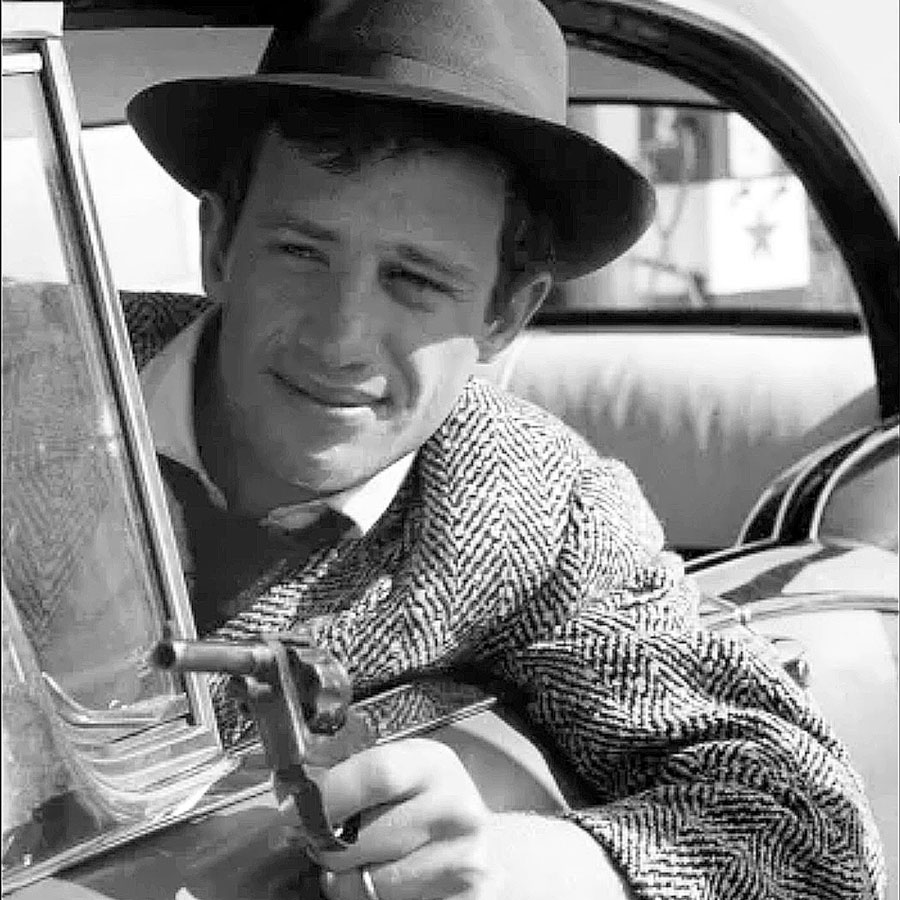
Michel Poiccard (Jean-Paul Belmondo) becomes a fugitive after shooting a cop dead.
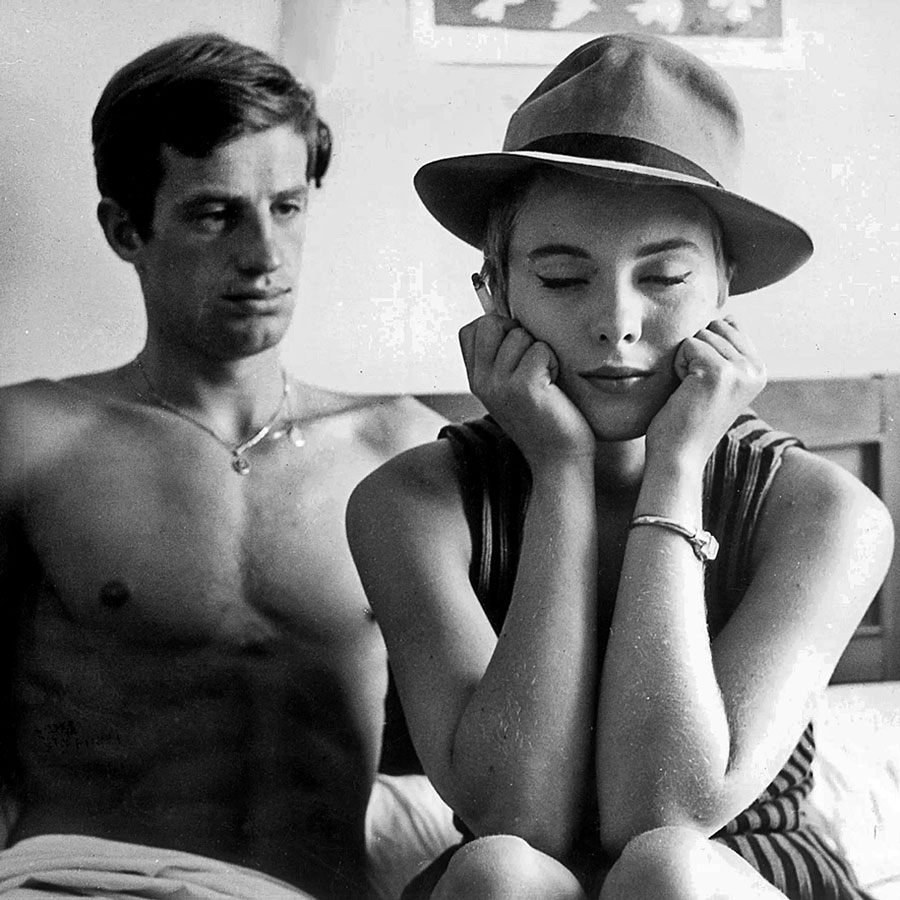
Michel attempts to seduce the introspective Patricia Franchini (Jean Seberg) through deep discussion and playful charm.
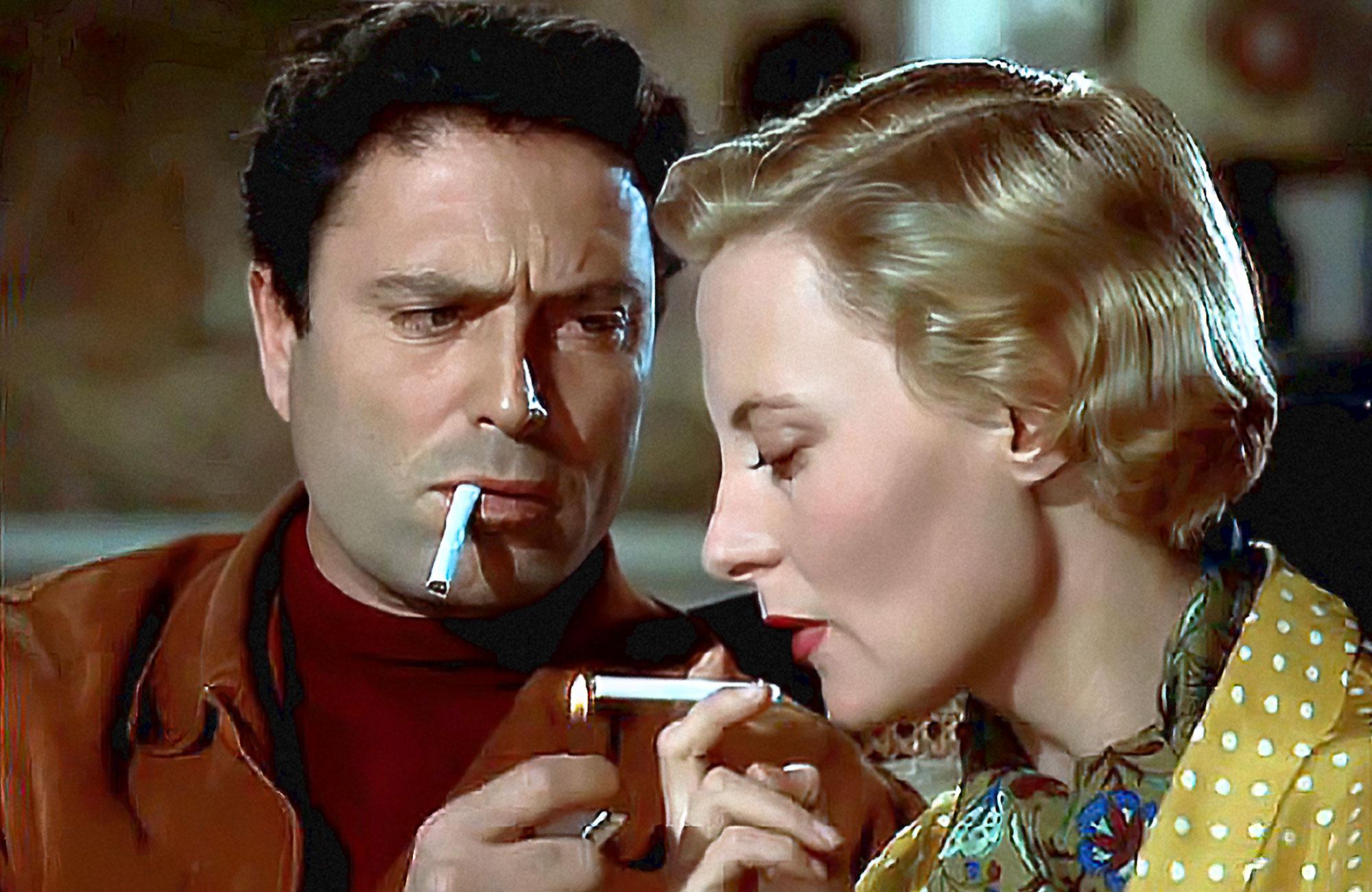
Jean-Luc Godard’s À bout de souffle (US: Breathless) is widely credited as launching the French New Wave movement and kindling a fundamentally new approach to filmmaking, one emphasizing experimentation, irony, and self-awareness. These qualities challenge the film’s (admittedly dubious) noir credentials, even presenting the film as a parody of the noir style (the protagonist idolizes Humphrey Bogart, his love interest longs to be named Ingrid, the fugitive on the run storyline seems not to take itself too seriously). In fact, Godard dedicates the film upfront to Monogram Pictures, one of Hollywood’s storied Poverty Row studios which produced low-budget noir classics like When Strangers Marry (1944), Suspense (1946), and I Wouldn’t Be in Your Shoes (1948), among many others. In a role that made him an overnight superstar, Jean-Paul Belmondo stars as Michel Poiccard, a small-time thief who, having just killed a cop, arrives in Paris to collect on some debts and retrieve his devoted but reluctant love interest Patricia, played by Jean Seberg, whose dramatic, disappointing post-Breathless career would lead to addiction, FBI surveillance and wiretapping (for suspicion of gunrunning for terrorists!), and suicide at the young age of 40. As the police close in, Patricia must decide whether to flee to Rome with Michel or turn him in. The film’s centerpiece is a long, meandering conversation in Patricia’s bedroom where the young lovers discuss art, philosophy, and their potential future together while Michel applies his most aggressive charms of seduction. Like the French New Wave more generally, the film won’t be everyone’s cup of tea, Godard’s kaleidoscope of innovations (handheld camera, long pans, extreme close-ups, subjective camera, jump cuts, low angle dollies, breaking the fourth wall, lack of logical music editing, etc.) often creating sensory confusion that will either exaggerate or reduce the tension, depending on one’s taste.
Rate+Review Breathless
You must be logged in to submit a review. You may also register for an account.