I must admit I like the work of Samuel Fuller. The color through me off at first for a noir film, but I learned to enjoy it. There are plenty of attractive elements, especially the homoerotic elements between Sandy Dawson (Robert Ryan) and Robert Stack (Eddie Spanier), as well as the beautiful photography of 1950’s Japan.
One thing that bothered me is how they kept making secret plans in buildings made of paper without concern for being heard by the bad guys.
I watched it with English subtitles. I thought it was funny the subtitles said [Speaking Japanese] when the characters were doing so, except when they said なの (a~so), which means “Is that so?” but was subtitled “Ah, so.”
I had to watch The Street with No Name right after, just to compare. They each have their own beauty. 3.5 stars for both.

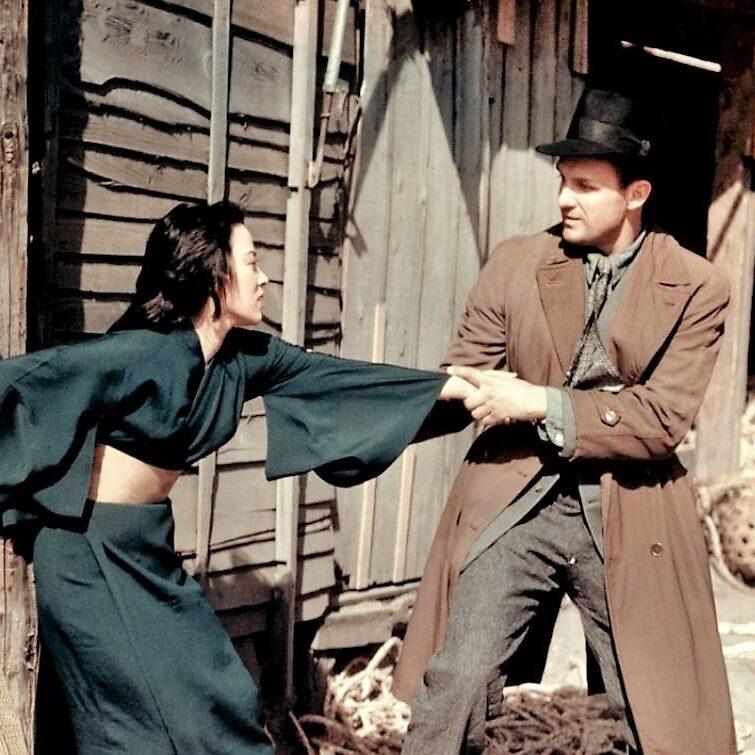
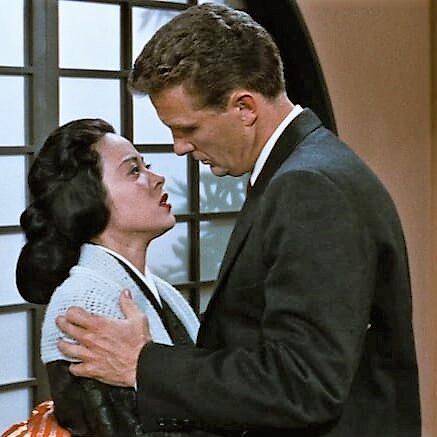
Shot in sweeping CinemaScope and vivid DeLuxe color, Samuel Fuller’s House of Bamboo is the best of a surprisingly small handful of American noirs set in the Far East. Loosely based on Mark Stevens’ character in The Street With No Name (1948), Eddie Spanier (Robert Stack) is a U.S. military police officer who goes undercover to infiltrate a racketeering gang of disgruntled American ex-servicemen who just held up a military train in the mountains, killing a U.S. Army guard. Suspicious of Spanier at first, ruthless gang leader Sandy Dawson (Robert Ryan, whose entrance is handled with skillful surprise) ultimately recruits him to serve as his right hand man — much to the displeasure of current sidekick Griff (Cameron Mitchell) — and involves him in heists while Spanier secretly reports back to American and Japanese investigators. Shirley Yamaguchi plays Mariko, the widow of a gang member whom Spanier uses for information and cover and to whom he quickly takes an extracurricular liking. Fuller makes glorious use of the exotic location (Mount Fuji towers majestically in the background) and interiors (shojis shimmer with blue light and silhouettes) without concealing the American postwar influences: in one party scene, the traditional Japanese kabuki instantaneously transforms into American swing. The film boasts one extraordinarily composed scene after another, from Spanier’s initial chase and confrontation with Mariko to the climax on a rotating building balcony during a carnival. The most memorable, the brutal and beautiful slaying of a stool pigeon in a bathtub followed by the killer’s conversation with the corpse, has the kind of raw power we’d come to find years later in the films of Coppola and Scorsese.
Share this film