Joan Crawford, Sterling Hayden, Ward Bond, Scott Brady, Mercedes McCambridge, Rhys Williams, Ernest Borgnine, John Carradine, Frank Ferguson, Paul Fix, Ian MacDonald, Ben Cooper, Robert Osterloh
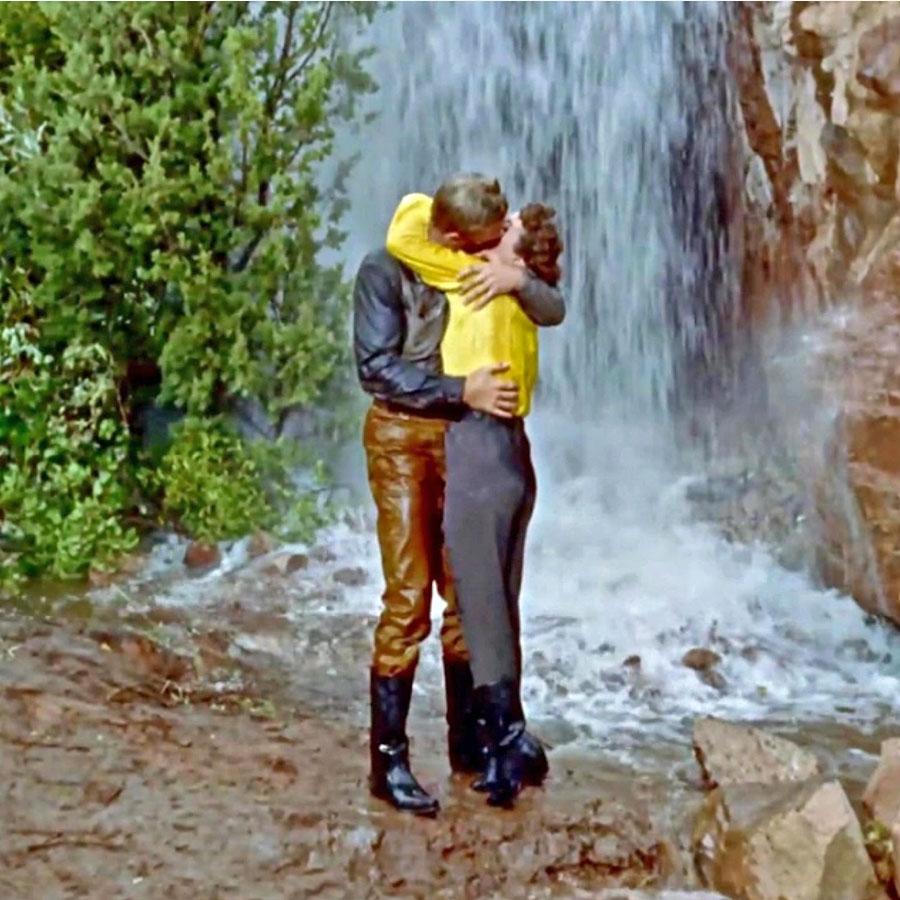
Johnny (Sterling Hayden) returns to Vienna's (Joan Crawford) to pick up where things left off.
Emma Small (Mercedes McCambridge) looks a little to happy as Vienna's burns to the ground.
“Spin the wheel, Eddie. I like to hear it spin.” This symbol-rich request is from saloon owner Vienna (Joan Crawford) in Nicholas Ray’s Johnny Guitar, a poetic noir western filmed in extraordinarily vivid color at Republic Pictures. Tough as nails and brimming with masculine energy, Vienna and her loyal staff are constantly at odds with the locals, who disapprove of Vienna’s support for a nearby railroad development as well as her relationship with a gang of outlaws led by her former lover “Dancin’ Kid” (Scott Brady) who recently killed the brother of Emma Small (a similarly masculine Mercedes McCambridge), already hateful toward Vienna over a romantic rivalry. Into this tension comes guitarist Johnny Logan (Sterling Hayden), an old flame who quickly falls back in love with Vienna and persuades her to close up shop and leave town; this decision, however, just kicks up more trouble: posses, explosions, hangings, and a massive fire. Ward Bond, Rhys Williams, Ernest Borgnine, and John Carradine are all on hand as locals with various loyalties and fates. Ray’s only film on which he also served as producer, Johnny Guitar is unlike any other classic film, a wholly subversive romp that turns nearly every western genre expectation on its head. For example, the opening scene lasts 40 minutes, set entirely inside a makeshift casino that looks and feels like a vast Technicolor cave. The tone is dreamy, at times surreal. The dialogue is sometimes metered, even poem-like. The irate townsfolk assemble in Vienna’s lobby twice, each time in formation like members of a Broadway cast. The romantic longings between Johnny and Vienna, accompanied by a suddenly sensual score, seem both out-of-place and perfectly natural. But it’s the extraordinary camera compositions that seal the deal, cementing the film’s legacy as a piece of art as wistful as it is weird.
Rate+Review Johnny Guitar
You must be logged in to submit a review. You may also register for an account.