Burgess Merdeith, Kieron Moore, Dulcie Gray, Michael Shepley, Christine Norden, Barbara White, Walter Fitzgerald, John Laurie, Martin Miller
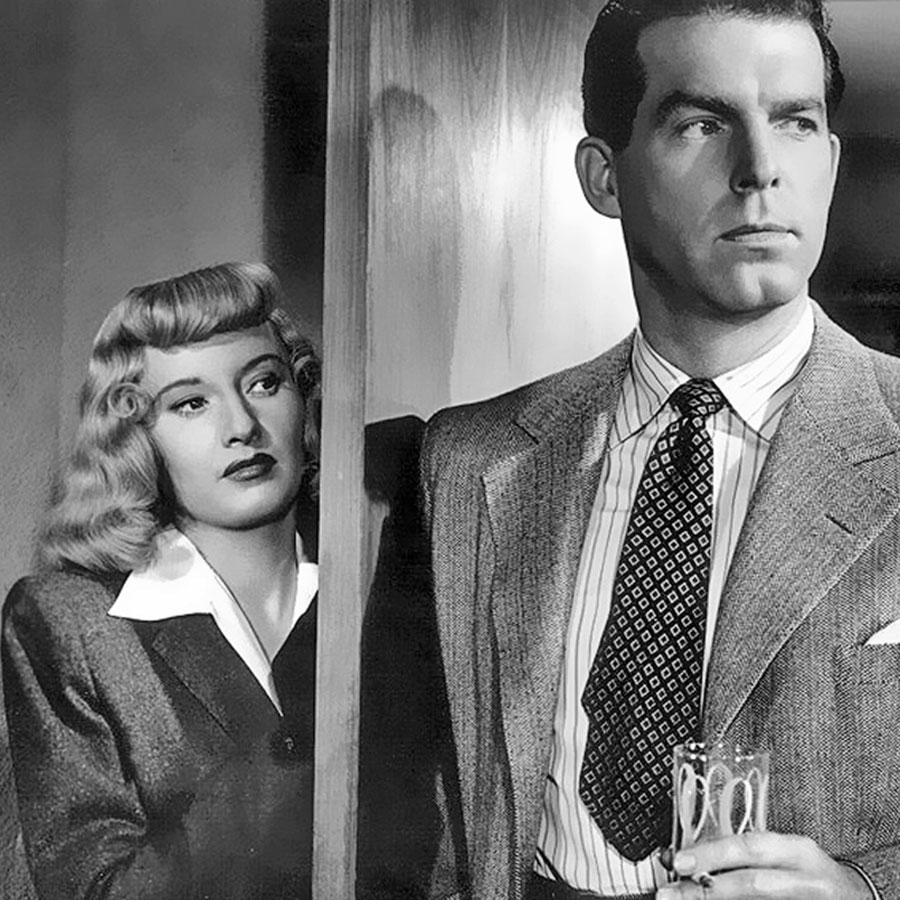
Felix Milne (Burgess Meredith) is lured away from his marriage by Babs Edge (Christine Norden).
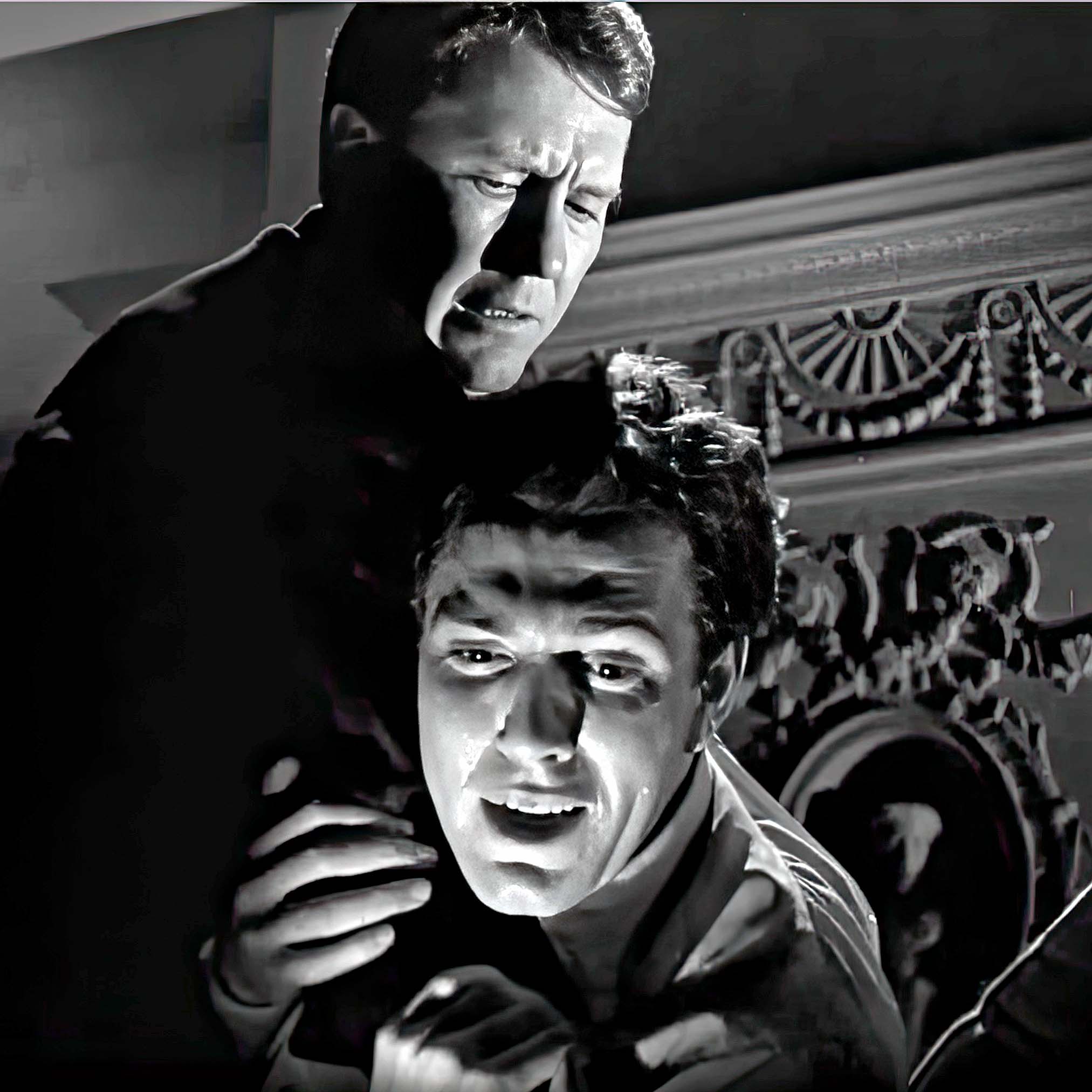
Milne helps Adam Lucian (Kieron Moore) uncover the trauma he experienced during the war.
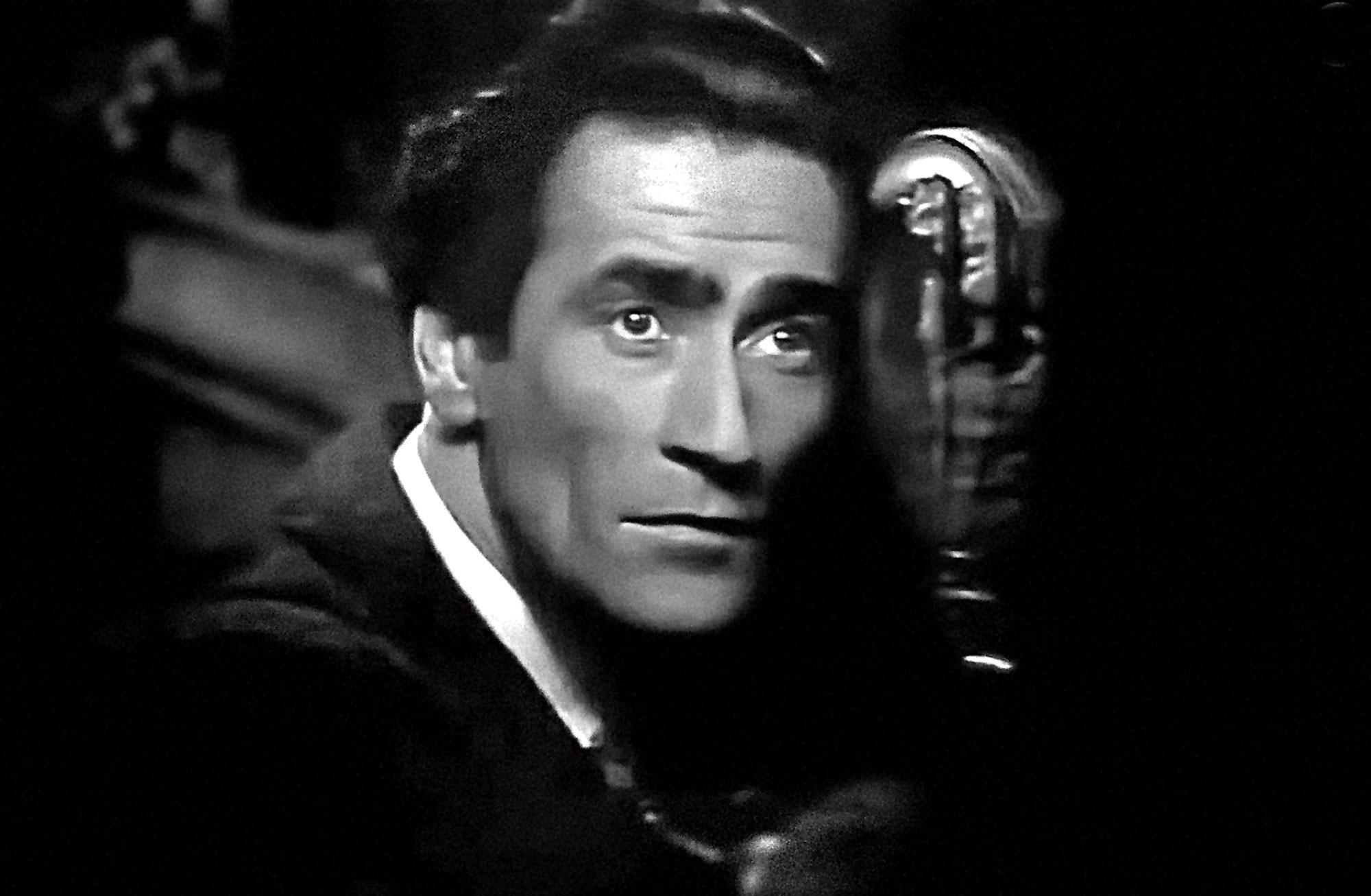
“This job needs a god to do it properly.” Sharing some themes with Joseph Losey’s The Sleeping Tiger (1954), Anthony Kimmins’ Mine Own Executioner may not come up in many conversations about film noir, but it’s an outstanding psychological thriller that dishes out enough noir elements — narratively, atmospherically, and visually — to satisfy any fan of the cycle. Featuring an impressively mature treatment of psychology for the time period (aside from the obligatory German-accented, Freud-like doctor character that seems to have appeared in every midcentury film involving psychiatry), the film centers around psychologist Felix Milne (Burgess Meredith) whose own mind seems to be just as vulnerable as those of his patients and whose marriage (to a wife played perfectly by Dulcie Gray) seems to be in trouble, as evident in his blooming attraction to Barbara Edge (Christine Norden). While Milne’s underlying insecurity (he’s not a medical doctor) and mental frailty (he suffers headaches and nervousness) provide the film’s emotional foundation, the real story begins when Milne is visited by Molly Lucian (Barbara White) who’s worried that her veteran pilot husband Adam (Kieron Moore) is, to put it mildly, not dealing with his wartime trauma too productively (“Well, he had a go at murder”). Having attempted to strangle Molly to death during some kind of fugue state, Adam has acknowledged his problem and agrees to work with Milne to figure out why he’s gone “schizoid” (Milne’s casual diagnosis); the long sequence of tormented flashbacks in Milne’s darkened office is a brilliant highlight of the film. Both Milne and Adam symbolize the destabilizing effects of World War II on the human mind, but only one of them will survive in the end. An unmistakable bleakness and guilt color the film, but a shred of hope will remain in the form of a little boy who wets the bed. All the performances are superb, but Moore conveys emotional volatility in a way that elicits both dread and compassion. Pay attention to Frankel’s moaning, ambient score, which adds aural tension and even confusion at key moments of the story.
Rate+Review Mine Own Executioner
You must be logged in to submit a review. You may also register for an account.