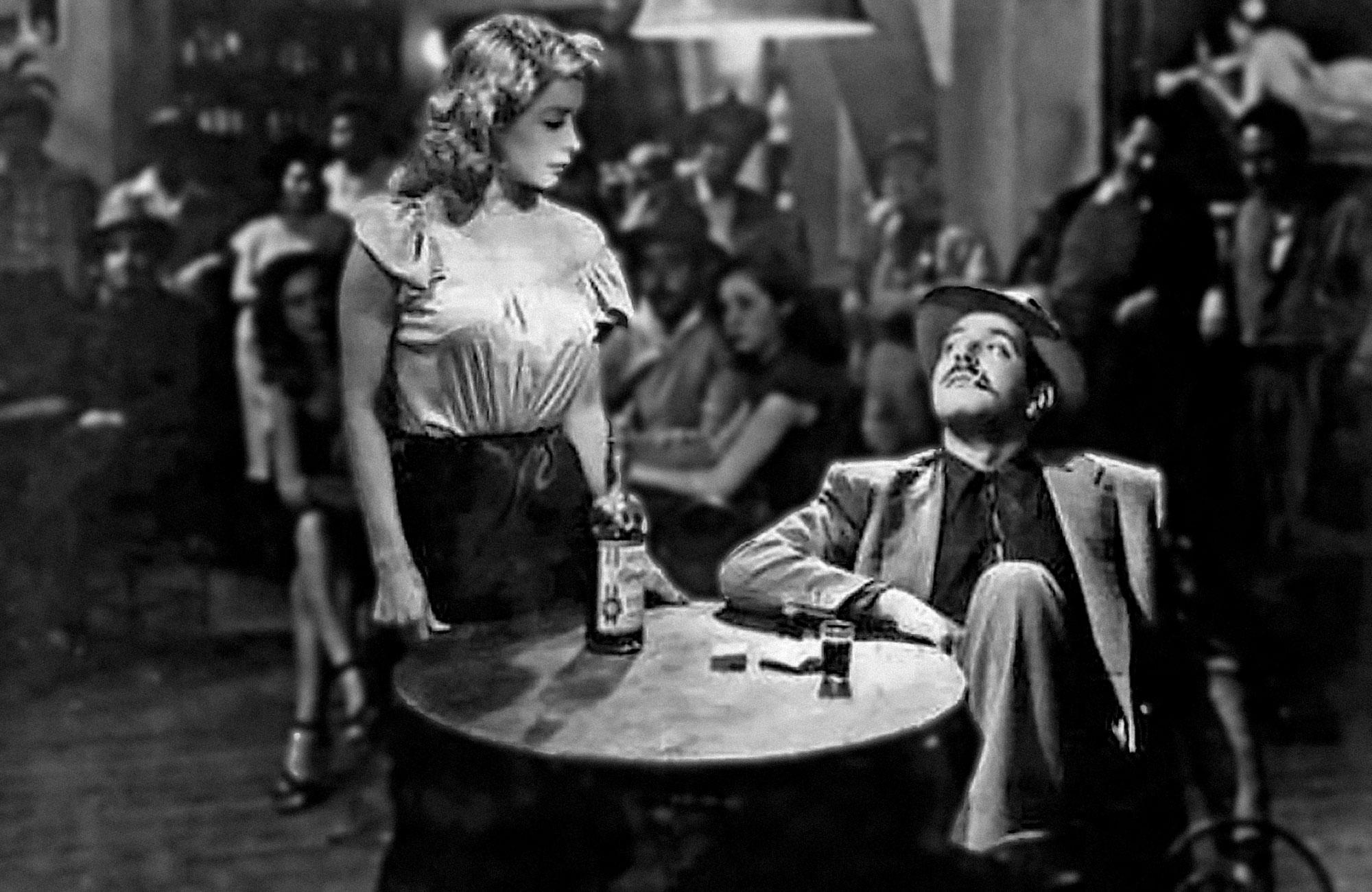
Ninón Sevilla as Violeta is bad ass. And her dancing is just as good as Rita Hayworth’s Put the Blame on Maime in “Gilda” (Charles Vidor, 1946).
Sevilla helped in the writing in the production, but being a woman she didn’t get the deserved credit, which makes her standing up for herself in the film much stronger.
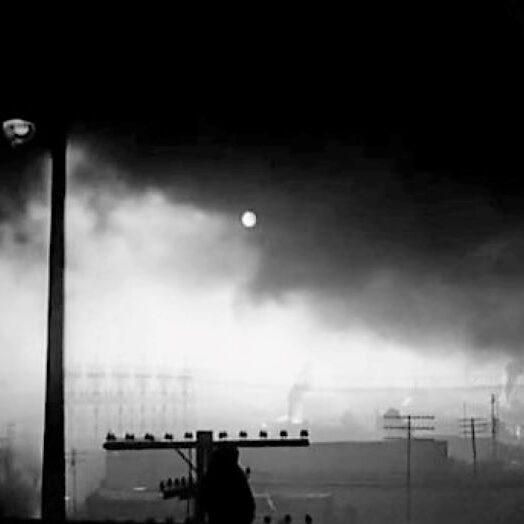
The deep focus photography by Gabriel Figueroa is flabbergasting, especially around the train tracks.
Víctimas del Pecado is moving, dark, funny, and socially conscious.
Judging by this film, it’s hard to believe México had a censorship board. How did Emilio Fernández get away with this film?
I think that the voice over at the end probably was one of the compromises with the board. It’s also the film’s weakest part. It reminds me of the version of Bicycle Thieves (Vittorio de Sica) that played in Franco’s Spain, with a voice over that explained how the characters would be okay in the end, because they loved each other and God.
5 stars and a half.

Mexico’s cycle of cabaretera films featured desperate women performing for men (on stage and/or in bed), often running from trauma and becoming trapped in the crossfire of pachucos, or small-time gangsters who symbolized machismo and rebellion. Many of these films were minor, formulaic productions designed more around music than story, but some, like Emilio Fernández’s Victimas del pecado (US: Victims of Sin), combined sleazy, underworld melodrama with spectacular entertainment a la Warner Brothers of the late 1930’s. The infinitely energetic Ninón Sevilla plays nightclub dancer Violeta, who rescues a co-worker’s abandoned baby from a trash can and decides to raise it herself, which creates violent tension between the owners of two competing nightclubs: Rodolfo (Rodolfo Acosta), Violeta’s employer and the baby’s father, and Santiago (Tito Junco), who takes a liking to Violeta and protects her. One or both of these guys will end up dead. The film combines physical brutality (Violeta smacks the baby’s disconsolate mother a whopping six times across the face at full strength; Rodolfo beats up Violeta to the point of disfigurement) with visual beauty (in a sequence when the silhouette of Violeta wanders with her baby, a stunning panoramic backdrop paints the industrial landscape with billows of smoke and naked moonlight to appear almost cosmic). The entire film takes place at night, the cobblestones outside the club constantly glimmering in either neon or lamplight, and Figueroa’s camera patiently follows characters through the doors of the club to build anticipation for the most dramatic moments. The musical numbers, of course, are extremely satisfying, two highlights being the jitterbug number and a dreamy ballad sung by Pedro Vargas.
Share this film
Story Elements