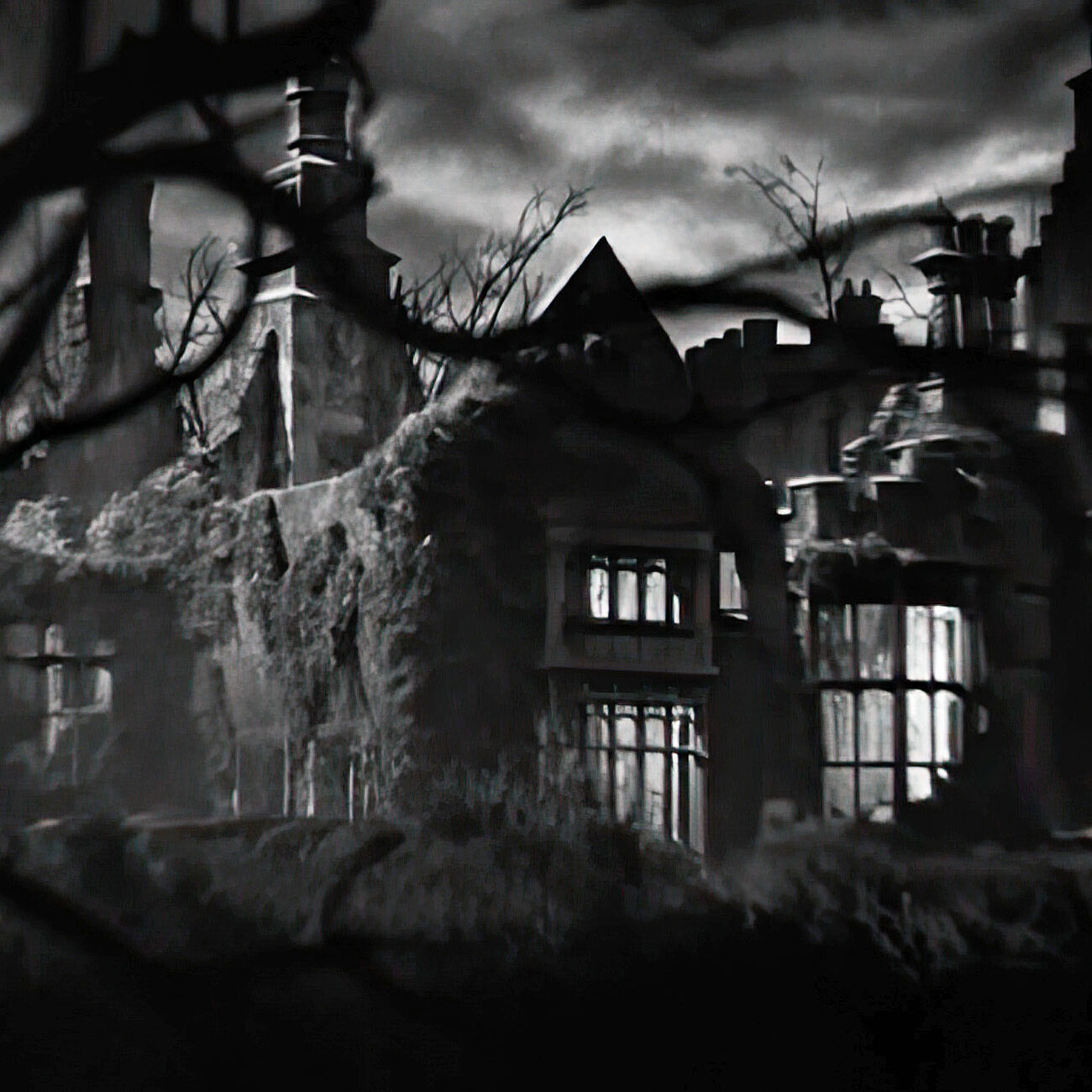
Few opening lines in 20th century literature are as instantly recognizable—or as quietly haunting—as Daphne du Maurier’s “Last night I dreamt I went to Manderley again” from her 1938 novel, Rebecca. Director Alfred Hitchcock wisely kept it for his 1940 film adaptation, letting Joan Fontaine’s voice drift over a long, gliding shot through the ruins of Max de Winter’s estate. It’s a moment of pure interiority, lifted verbatim from the novel’s first person narration. And then, curiously, it never happens again.
Share this post
For a story built entirely on the second Mrs. de Winter’s inner life – her insecurities, fantasies, fears, and self doubt – Hitchcock’s decision to abandon voiceover after the opening sequence is one of the most fascinating choices in the film. Many viewers today remember the voiceover so vividly that they assume it continued throughout the movie. It didn’t. Instead, Hitchcock and Fontaine had to find other ways to recreate a character whose identity is shaped by what she thinks rather than what she says.
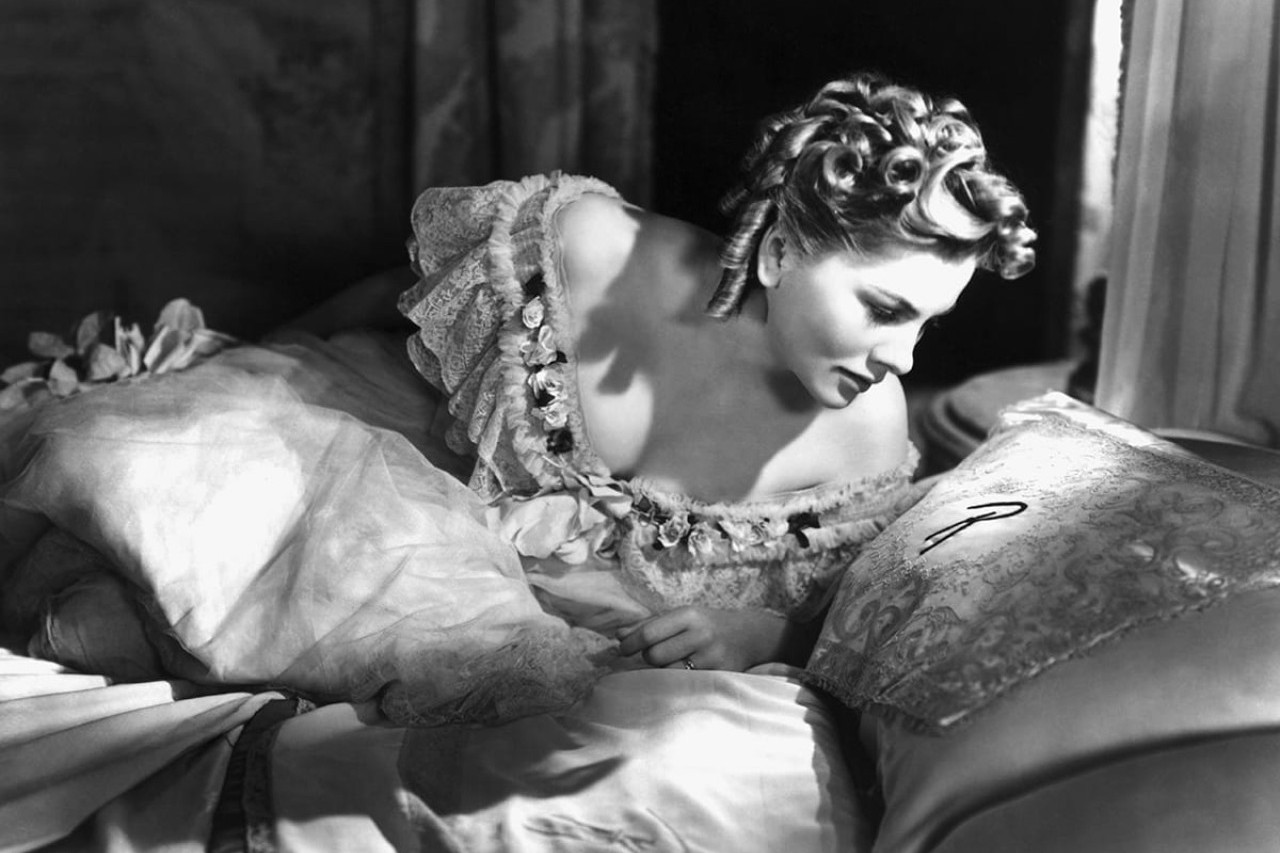
The result is a film that captures much of the novel’s psychological depth, especially in its Gothic to noir transformation, but also leaves certain emotional textures on the page. Rebecca becomes a case study in how cinema can – and can’t – translate first person psychological fiction.
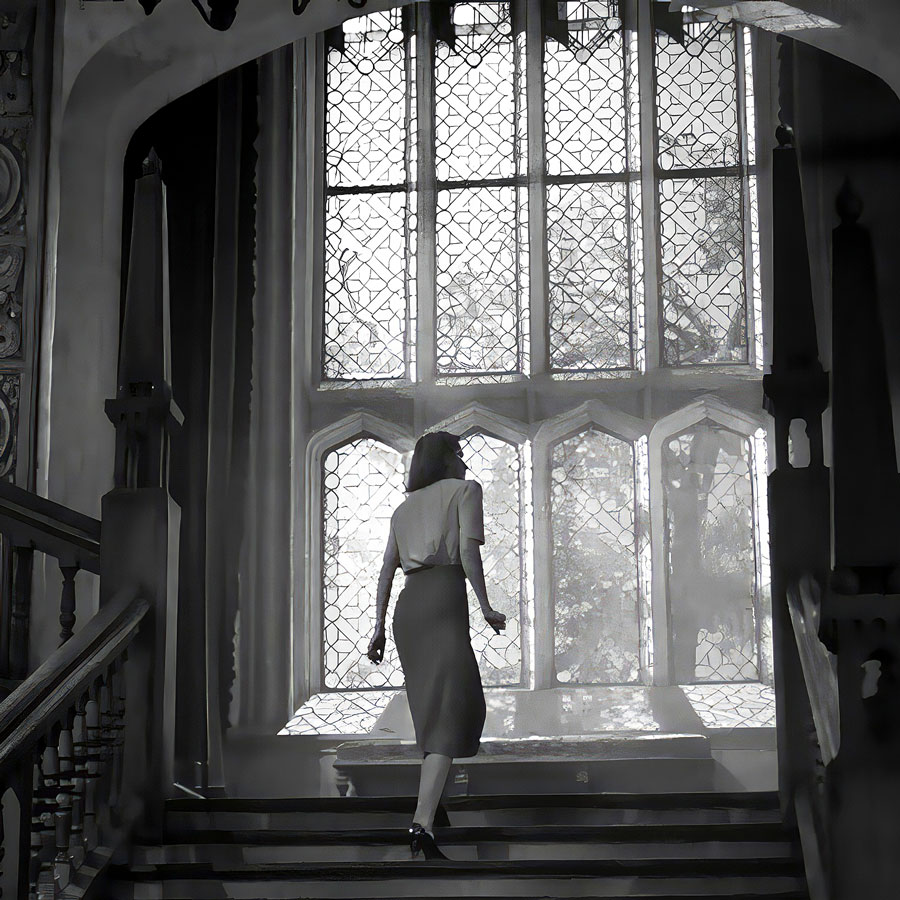
Despite Hitchcock’s desire to explore, producer David O. Selznick insisted on fidelity to du Maurier’s novel, just as he had with Gone With the Wind the year before. That insistence gives the film its structure, its atmosphere, and its dramatic impact. But fidelity to plot is different from fidelity to voice, and this is where Hitchcock’s instincts diverge from the novel’s design.
Even in the absence of voiceover, some moments of interiority are recreated almost exactly. When the new Mrs. de Winter first meets Mrs. Danvers, du Maurier writes:
I remember blushing scarlet, stammering some sort of thanks in return, and dropping both my gloves in confusion… When she handed them to me, I saw a little smile of scorn upon her lips. Something, in the expression of her face, gave me a feeling of unrest.
Hitchcock stages this with remarkable precision. Played by the remarkable Judith Anderson, Mrs. Danvers’s stillness demands Fontaine’s nervous gestures, and George Barnes’s close up cinematography brings this precise moment to life. It’s one of the scenes where the film’s visual language perfectly mirrors the novel’s psychological perspective.
But other moments lose something in translation. When Maxim first brings his new wife home to Manderley, the interminable driveway gets on her nerves:
The length of it began to nag at my nerves, it must be this turn, I thought, or round that further bend… I was forever disappointed, there was no house, no field, no broad and friendly garden.
In the film, she simply says she’s cold. It’s a tiny omission, but it removes a layer of emotional complexity—her anxiety, her eagerness, her simmering impatience.
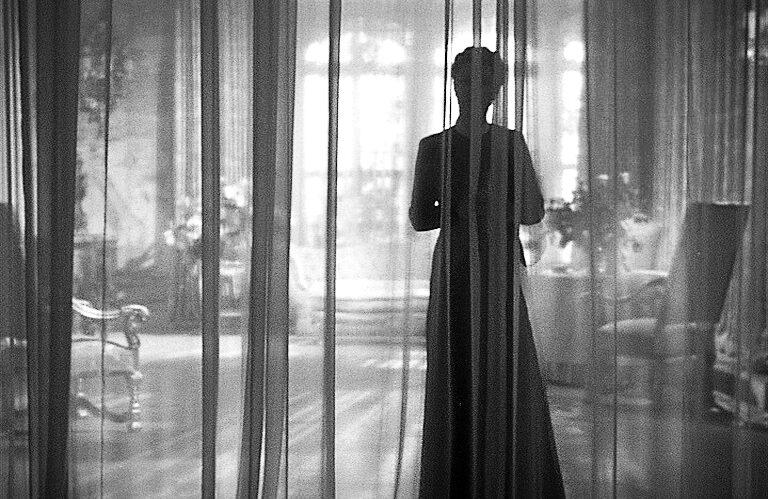
More significantly, the novel’s theater metaphor—her sense that her marriage is a performance—becomes something different onscreen. Du Maurier writes:
Oh God, I thought, this is like two people in a play, in a moment the curtain will come down, we shall bow to the audience and go off to our dressing rooms… This can’t be a real moment in the lives of Maxim and myself.
Hitchcock replaces this with a clever cinematic device: the couple watching their honeymoon home movies (which don’t exist in the novel). Their projected images become the “actors,” a visual metaphor that accomplishes the same idea without voiceover. It’s one of the film’s most elegant solutions to the problem of interiority.
Other moments, however, simply vanish. Her imagined dinner table fantasies about Rebecca, or her sense of Maxim’s “private inward hell” during the ball, are absent. These omissions don’t weaken the film, but they do shift its emotional center. The second Mrs. de Winter becomes less imaginative, less observant, maybe less psychologically vulnerable than her literary counterpart.
If the film loses some interiority in its adaptation, it gains something else: the extraordinary psychological tension between Joan Fontaine and Judith Anderson. Hitchcock told François Truffaut that Mrs. Danvers was designed to be “almost never seen walking,” because showing her in motion would “humanize her.” Instead, she appears like an apparition—silent, sudden, spectral. “What happened is that the girl suddenly heard a sound, and there was the ever-present Mrs. Danvers standing perfectly still by her side,” he explained.
This is where Fontaine’s and Anderson’s performances become the film’s true voiceover. Fontaine physically conveys the character’s fear, her self consciousness, her timidity, the gradual emergence of her anger and self assertion—all of it plays out in her eyes, her posture, her bitten fingertips. But it’s the friction with Anderson’s Danvers, the conflict between two women who express their vulnerability in completely different ways, that adds the psychological depth. Is Danvers a manifestation of the second Mrs. de Winter’s subconscious? Was this du Maurier’s intention with the character? Was it Hitchcock’s?
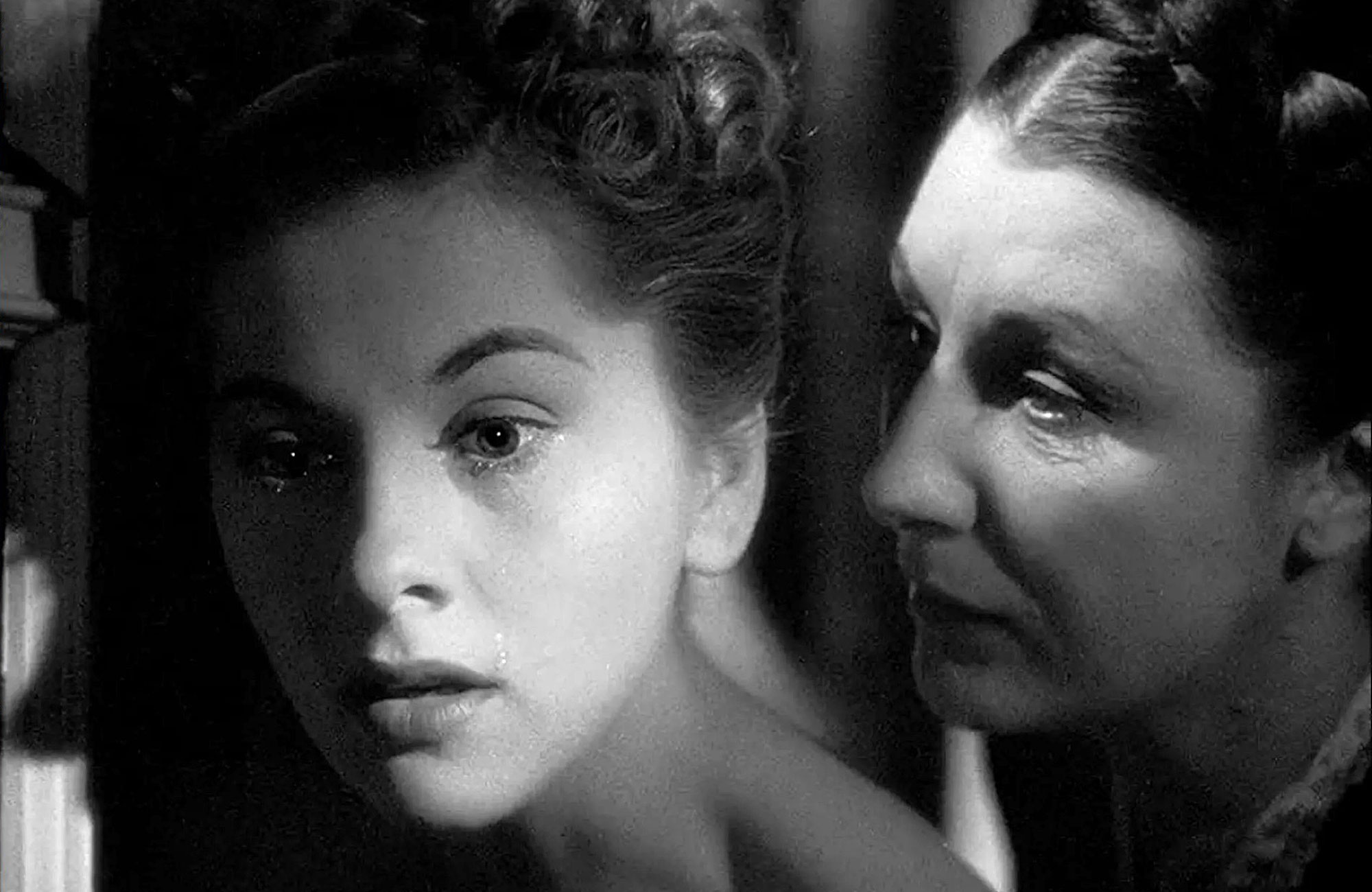
The two major confrontations between Mrs. Danvers and the second Mrs. de Winter are mini-masterpieces of psychological conflict.
The first, when Danvers finds her exploring Rebecca’s bedroom, is a study in power imbalance. Fontaine’s shrinking presence, Anderson’s glacial stillness, and the oppressive set design create a sense of interior panic without a single line of internal narration. The second, when Danvers urges her to jump from the window, is even more potent. The novel gives us the narrator’s thoughts, but the film gives us something arguably stronger: the hypnotic pull of Danvers’s voice, the wind battering the curtains, the camera drifting toward the void, the sudden explosion of light from the fireworks.
The latter is also where the film’s noir sensibility emerges. The psychological manipulation, the fatalistic pull toward self destruction, the sense of being trapped in a house full of secrets – these are the Gothic noir textures that give way to the murder mystery of the final act. The internal conflict has leapt into a new external form.
Hitchcock’s Rebecca can never replicate the novel’s first person interiority—no film could. But it comes remarkably close by trusting Fontaine to embody the narrator’s inner life rather than speak it, and by matching her performance with that of Anderson, the conflict between their characters becoming the film’s psychological engine. The missed opportunities – moments where the novel’s interiority could have deepened the film – are real but not damaging. In the end, Rebecca shows how cinema can translate interiority not through voiceover, but through performance, atmosphere, and the shadows between two women locked in a psychological duel.

Michael Bayer is the creator and founding editor of Heart of Noir. His full bio can be found here.